
Visual QA Testing: All You Need to Know

Visual QA Testing: Tools, Benefits, and Best Practices for 2026
Nearly 70% of UI defects are reported by users rather than caught during testing!
What’s worse is that many of these issues aren’t functional, but visual. Users instantly pick up these visual defects, affecting their overall willingness to associate with your product.
Visual QA testing addresses this blind spot by validating the rendered interface. It compares screens against approved baselines and flags unintended visual changes before they reach production. Instead of relying on manual reviews or user complaints, teams get consistent visual coverage across browsers, devices, and breakpoints.
Through this article, I’ve covered what visual QA testing is, why it matters, and how modern teams use it in practice. It also breaks down the top 5 visual QA tools for 2026, including a hands-on look at Percy to run visual tests effectively.
What is Visual QA Testing?
Visual QA testing is a QA practice that makes sure an application’s interface appears as expected to users. It focuses on the appearance of the interface, such as layout, spacing, colors, fonts, and element visibility.
This type of testing helps teams detect visual bugs that automated functional tests and unit tests often miss. By comparing current screens to approved visual baselines, visual QA testing ensures the UI remains consistent across code changes, browsers, devices, and screen sizes.
Upgrade to AI-powered Visual QA
Why is Visual QA Testing Important?
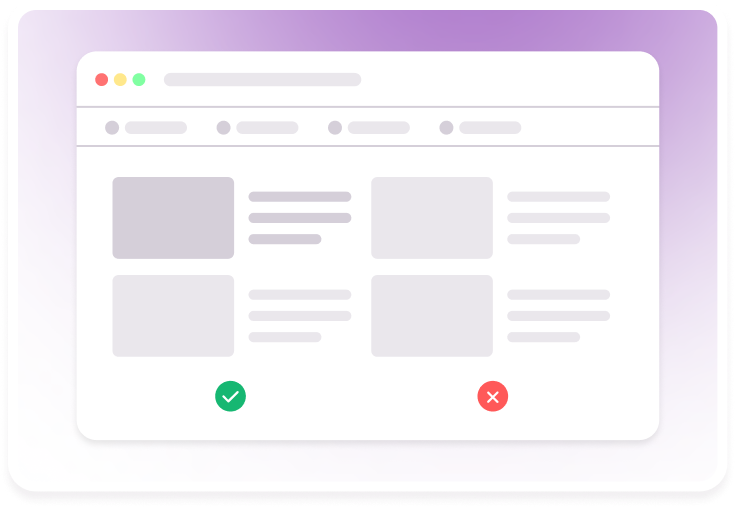
Many visual issues slip through because QA tests functionality, not how the interface actually appears. A page can load successfully while key elements overlap, disappear, or break on specific browsers or screen sizes. When these problems reach users, they directly impact trust, usability, and conversion rates.
Visual UI testing adds a safety layer by catching UI regressions before release. It helps teams maintain design consistency as products scale, ship faster, and support more devices. As interfaces grow more dynamic and design-driven, visual QA becomes essential for delivering reliable user experiences, not just working software.
What Teams Can Achieve Using Visual QA Testing:
- Catch unintended UI changes before they reach production, reducing last-minute fixes and rollbacks
- Maintain visual consistency across browsers, devices, and screen resolutions
- Reduce reliance on manual UI reviews, saving QA and design teams significant time
- Improve collaboration between developers, testers, and designers through shared visual baselines
- Increase confidence in releases by validating both functionality and appearance
What Components Do Visual QA Tests Check For?
Visual QA tests check whether UI elements appear correctly on the screen, including layout, spacing, text, and colors. This helps ensure the interface looks consistent and usable after code or design changes. Here are all the components they check for:
- Layout and Spacing: Detects misaligned sections, overlapping elements, and broken grid structures.
- Text and Typography: Identifies font changes, truncated text, inconsistent line heights, or spacing issues.
- Colors and Visual Styling: Flags unintended changes in colors, contrast, or visual themes that affect branding and accessibility.
- UI Element Presence and Positioning: Ensures buttons, icons, images, and components are visible and placed correctly.
- Responsive and Device Rendering: Verifies that layouts adapt correctly across screen sizes, browsers, and devices without visual breakage.
Equip your QA with AI-powered visual testing
When to Perform Visual QA Testing?
Visual QA testing is most effective when it is integrated throughout the development lifecycle, not treated as a final checkpoint. Running visual checks at the right moments helps teams catch issues early and avoid costly rework.
- After UI or CSS Changes: Validates that layout, styling, and design updates do not introduce unintended visual regressions.
- Before Major Releases: Confirms visual stability across key user flows prior to deploying new features or redesigns.
- During Cross-Browser and Device Testing: Ensures the interface renders consistently across different browsers, operating systems, and screen sizes.
- As Part of CI/CD Pipelines: Automatically flags visual differences whenever new code is merged or deployed.
- Following Design System Updates: Detects downstream visual changes when shared components or design tokens are modified.
What Are Visual QA Tools?
Visual QA tools are software solutions that automate the process of validating how an application’s interface looks across different environments. They capture screenshots during test runs and compare them against approved visual baselines to detect unintended changes.
These tools integrate with existing test frameworks and CI pipelines, making visual checks part of regular development workflows. Instead of relying on manual reviews, teams use visual QA tools to consistently monitor UI quality at scale.
5 Best Visual QA Tools for 2026
We evaluated visual testing tools based on visual regression detection accuracy, workflow integrations, automation support, and team collaboration features. This list reflects tools that work well with modern CI/CD processes, scale across devices and browsers, and reduce manual QA effort.
Percy By BrowserStack
Percy is an AI-powered visual testing tool that detects unintended UI changes instantly through baseline comparison and AI reviews. Percy tool picks up intended visual diffs, ignoring visual noise, and reduces flaky tests. It also hosts a real device infrastructure of over 3500 web and mobile devices, to conduct tests across different screen sizes, browsers and viewports.
Key Features of Percy:
| Feature | Description | Impact on Visual QA |
|---|---|---|
| Automated Visual Regression Testing | Captures snapshots during test runs and compares them against approved baselines. | Detects unintended UI changes early and reduces post-release visual bugs. |
| AI-Assisted Reviews | Uses intelligent diff detection and noise reduction to highlight meaningful changes. | Minimizes false positives and speeds up visual review cycles. |
| Real Device and Browser Rendering | Renders screenshots on over 3500+ real browsers and devices, not emulators. | Ensures visuals match what end users actually see in production. |
| Responsive Breakpoint Testing | Tests layouts across multiple screen sizes from a single snapshot. | Prevents responsive layout issues from slipping into releases. |
| Mobile Application Visual Coverage | Supports visual testing for mobile web and native app interfaces through App Percy. | Extends visual QA beyond desktop web experiences. |
| CI/CD and Pull Request Integration | Connects visual results directly to builds and pull requests. | Makes visual QA part of everyday development workflows. |
| Collaboration and Approval Workflow | Allows teams to review, comment, and approve visual changes. | Improves alignment between QA, design, and development teams. |
What Sets Percy Apart From The Rest?
Percy runs visual tests on real device and browser infrastructure, rather than relying only on headless rendering. This significantly reduces environment-related inconsistencies and ensures that visual diffs reflect real user conditions. Teams gain confidence that approved visuals will behave the same way in production.
Another differentiator is Percy’s AI-driven review workflow. Intelligent snapshot stabilization, animation handling, and diff filtering help reviewers focus on meaningful UI changes instead of noise. This makes visual QA faster and more scalable, especially for large applications with frequent UI updates.
Percy also offers 50+ integrations across the modern testing ecosystem. It works seamlessly with Selenium, Playwright, Cypress, Puppeteer, WebdriverIO, and Storybook, along with major CI/CD tools like GitHub Actions, GitLab, Jenkins, and CircleCI. Teams can add visual checks without rewriting existing tests.
Finally, Percy bridges the gap between development and design by embedding visual feedback directly into pull requests. Reviewers can assess UI changes alongside code changes, approve intentional updates, and block regressions before deployment. This keeps visual quality aligned with every release cycle.
How to Perform Visual QA Tests Using Percy
This walkthrough shows how teams use Percy to add visual checks into their existing test workflows. The goal is to capture UI changes early, review them in context, and prevent visual regressions from reaching production without adding manual overhead.
Step 1: Log In to Percy: Start by signing in to the Percy dashboard. From here, teams can view existing projects, recent builds, and visual changes tied to code updates. The dashboard acts as a central place for tracking visual history.

Step 2: Create a New Project: Create a project to group related visual tests. Percy generates a unique project token that links your application or test suite to the correct workspace. This keeps builds organised across environments and branches.

Step 3: Set Environment Variables: Add the project token as an environment variable in your local setup or CI environment. This allows Percy to securely receive screenshots during test execution without hard-coding credentials.
Step 4: Integrate the Percy SDK: Install Percy’s SDK for your test framework or application setup. Percy supports tools like Selenium, Cypress, Playwright, WebdriverIO, and Puppeteer, allowing teams to reuse existing tests instead of creating new ones.

Step 5: Generate the First Build as a Baseline: Run your tests to capture the first set of screenshots. These images become the baseline that represents the expected UI. Teams usually review this build carefully since all future comparisons depend on it.
Step 6: Make UI Changes and Trigger a New Build: After updating code, styles, or components, run the tests again. Percy captures new snapshots under the same conditions, ensuring comparisons reflect real UI changes rather than environment differences.
Step 7: Review and Compare Visual Changes: Percy highlights differences using side-by-side views, overlays, and visual markers. Reviewers can quickly see what changed, where it changed, and whether the update matches expectations.
Step 8: Approve or Fix Before Release: Intentional UI updates are approved and added to the baseline. Unintended changes are flagged and fixed before deployment. This step keeps visual quality aligned with every release.

Pricing: Percy offers a free tier suitable for small teams and proof-of-concept testing, with limits based on monthly snapshot usage. Paid plans scale with screenshot volume and add extended build history, advanced collaboration features, and enterprise support, making it suitable for growing teams and large organizations.
Applitools Eyes
Applitools Eyes is an AI-powered visual testing platform that uses machine vision to detect meaningful UI changes across web, mobile, and desktop applications. It goes beyond simple pixel comparison by understanding layout, structure, dynamic content, and visual context, and can integrate with existing test suites and CI/CD workflows.
Key Features:
- Visual AI Regression: Intelligent comparison that finds real UI issues while ignoring insignificant variations like rendering differences.
- Ultrafast Grid Execution: Parallel cross-browser and viewport test execution to scale visual validations quickly.
- Smart Baseline Maintenance: Reduces test maintenance by automatically managing similar visual changes.
Limitations:
- Higher Cost: Pricing can be expensive for smaller teams and intensive test volumes.
- Cloud-First Architecture: Primarily cloud-based, which may be limiting for strict offline or firewall-only environments.
- Learning Curve: While powerful, teams may need time to fully adopt and optimize its workflows.
- Not Full Functional Testing: Visual validation augments but does not replace core functional test coverage.
Pricing: Applitools offers tiered plans starting with free and entry tiers, then paid plans from roughly $899-$969/month (billed annually) for AI-powered visual testing, with enterprise options available.
BackstopJS
BackstopJS is an open-source visual regression testing tool that captures screenshots and compares them to baselines using browser automation. It’s flexible and scriptable, making it a solid choice for teams comfortable with JavaScript.
Key Features:
- Open-Source Free Tool: No licensing cost and broad community support.
- Configurable Visual Diffs: Generates visual diffs to identify UI regressions over time.
- Puppeteer/Playwright Integration: Works with common headless browser drivers for snapshot automation.
Limitations:
- Pixel-Based Only: Lacks advanced AI filtering, so false positives from trivial rendering differences are common.
- Manual Setup and Maintenance: Requires more configuration and upkeep compared to managed services.
- Limited Reporting and Collaboration: No built-in hosted dashboard or team review features.
Pricing: BackstopJS is completely free as an open-source tool; however, you may incur indirect costs for infrastructure or custom scripting.
LambdaTest
LambdaTest is a cloud-based testing platform that supports cross-browser, cross-device, and visual UI testing alongside traditional automated and live testing. Its visual tests detect layout and CSS issues across a broad device matrix.
Key Features:
- Cloud Real Device & Browser Coverage: Test on thousands of browser and OS combinations.
- Visual UI Testing: Detects visual regressions, layout shifts, and breakpoint issues.
- CI/CD Integrations: Works with Jenkins, GitHub, GitLab, and other DevOps pipelines.
Limitations:
- UI Cloud Dependency: Visual testing relies on cloud infrastructure, which can vary based on device availability and region.
- Less AI-Focused: Visual validation is more traditional and less intelligent compared to AI-driven tools.
- Configuration Overhead: Setting up automation tests (Selenium, Cypress, etc.) can require effort.
- Feature Spread: While broad, the platform’s multi-purpose nature means visual tests aren’t as specialized as dedicated tools.
Pricing: LambdaTest has flexible plans including a free tier with basic testing, and paid plans starting around $15-$99/month for more extensive live, automated, and visual test support. Enterprise pricing is custom.
PantoAI
Panto AI is a newer AI-driven QA and debugging platform that provides automated test case generation, UI adaptation, and self-healing test automation for web and mobile. It aims to reduce manual effort by understanding app context and adapting tests as the UI evolves.
Key Features:
- Natural Language Test Generation: Automatically creates test cases based on simple descriptions.
- Self-Healing Automation: Tests adapt when UI changes, reducing maintenance overhead.
- Real and Emulated Test Execution: Runs tests across real devices and emulators with logs, screenshots, and debug reports.
Limitations:
- Emerging Technology: As a newer entrant, ecosystem maturity and community support may be less established than older tools.
- Mobile Focused: Strong on mobile app QA but may offer fewer specialized features for detailed desktop visual regression.
- Tooling Integration Depth: May not yet have as many integrations with existing test frameworks as legacy tools.
- Pricing and Transparency: Public pricing details are limited compared to more established solutions.
Pricing: Panto AI’s pricing is not fully public, and tends to be custom based on usage and organizational needs. Interested teams usually contact sales or trial the platform to understand cost.
Best Practices for Visual QA Testing
- Define Stable Visual Baselines: Establish clear, approved baselines before scaling visual tests. Review initial snapshots carefully since every future comparison depends on them.
- Focus on Critical User Flows: Prioritise pages and components that impact conversions, onboarding, and core workflows. This keeps visual QA effective without excessive snapshot volume.
- Control Dynamic Content: Freeze animations, timestamps, ads, and random data where possible. Reducing visual noise helps avoid false positives during reviews.
- Test Across Real Browsers and Devices: Validate visuals in environments your users actually use. Real device and browser coverage prevents environment-specific UI issues from slipping through.
- Integrate Visual Tests into CI/CD: Run visual checks automatically on pull requests and merges. Early detection reduces late-stage fixes and release delays.
- Review Changes Collaboratively: Involve QA, developers, and designers in visual reviews. Shared ownership improves decision-making and speeds up approvals.
- Update Baselines Intentionally: Approve visual changes only when they are expected and verified. Treat baseline updates as controlled changes, not quick fixes.
Ready to Conquer Visual Regressions With Percy?
Conclusion
Visual QA testing has become a necessary part of modern quality assurance as interfaces grow more dynamic and release cycles move faster. Functional tests alone cannot guarantee a stable user experience when visual regressions can quietly break layouts, hide content, or degrade usability across devices.
By combining visual QA tools with existing automation workflows, teams can catch UI issues early, collaborate more effectively, and ship with greater confidence. As visual complexity and device diversity continue to increase, visual QA testing will play an even bigger role in maintaining product quality and user trust.
FAQs
Visual QA testing cannot replace functional testing because it does not validate business logic or workflows. It only checks how the interface looks, not how it behaves.
It can also require careful setup to avoid false positives, especially when dealing with dynamic content or frequent design updates.
Visual QA testing is used by QA engineers, developers, and product teams who want to prevent UI regressions. Designers also benefit by ensuring their designs are implemented consistently.
It is especially valuable for teams working on user-facing products with frequent UI changes.
The scope of visual testing will continue to expand as applications become more design-driven and support more devices. AI-based visual comparison and automation will reduce manual effort and improve accuracy.
Visual testing is expected to become a standard part of CI/CD pipelines rather than an optional QA step.
The primary purpose of visual testing is to detect unintended changes in how an application looks after updates. It ensures that UI changes do not break layouts, hide elements, or create inconsistencies across devices.
Visual testing protects the user experience by validating appearance alongside functionality.
QA testing is the practice of verifying that software meets expected quality standards before it reaches users. It checks that features work as intended, perform reliably, and provide a consistent experience.
QA testing can include functional, performance, security, and visual checks. Each type focuses on a different aspect of product quality.
Visual quality assurance is the process of checking whether a product’s interface looks correct to users. It focuses on layout, design, spacing, colors, and element visibility to ensure the UI matches what was intended.
Unlike functional testing, visual QA validates appearance rather than behavior. It helps catch visual issues that can affect usability even when features technically work.
Related Articles

Top Cross Browser Visual Testing Tools in 2026
Explore top cross browser visual testing tools for 2026, compare features, pricing, and learn how to...

How to Report Bugs During Visual Regression Testing
Detect and report visual bugs efficiently with visual regression testing using Percy, CI integration...

What is Visual Validation Testing?
Understand how visual validation testing works, its importance and impact in visual testing, and how...